
Sweet: why warm tastes sweeter
Also searched as: sweet, sweetness, too sweet, balance sweetness, melted ice cream too sweet
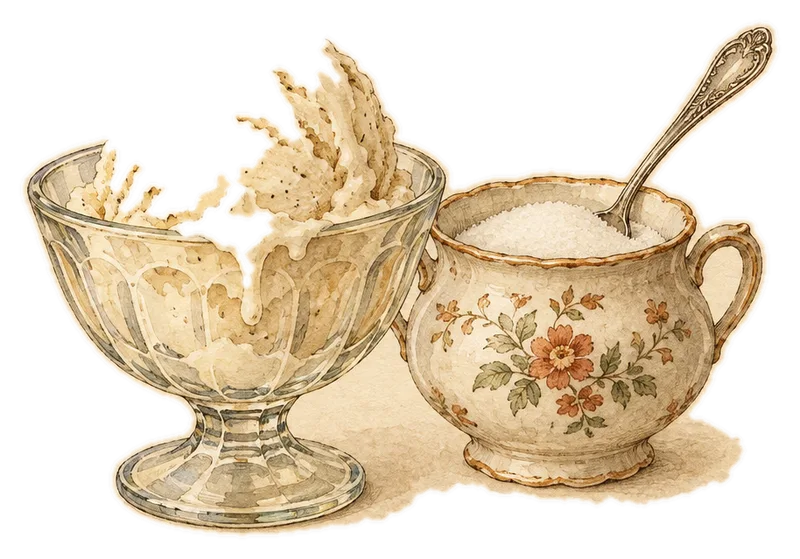
In short: Sweetness signals energy to the tongue. How sweet something seems depends strongly on temperature: warm, it tastes noticeably sweeter than cold.
Like a radio whose volume rises with warmth: the same station, but cold it is turned down.
What happens
dock onto a sweet sensor on the tongue. Part of the signal chain works much harder when warm and more weakly when cold. That is why melted ice cream tastes sickly sweet and warm cola sticky. , bitterness and salt change sweetness further: a pinch of salt lifts it, acid balances it.
Why it matters
Knowing this, you sweeten cold desserts more strongly and warm ones more sparingly. And you rescue an overly sweet dish with acid rather than more of everything else.
Rules of thumb
- Taste ice cream and sorbet mixtures warm and leave them slightly too sweet: frozen, they seem much less sweet.
- Too sweet: a few drops of lemon or a pinch of salt.
- A pinch of salt also belongs in sweet doughs and caramel; it rounds out the flavour.
Levers
2
In practice
2
Desserts and sweets
An ice cream mixture that tastes just right warm is too bland once frozen.
Fruit
Strawberries with a splash of lemon taste fruitier, not more sour.
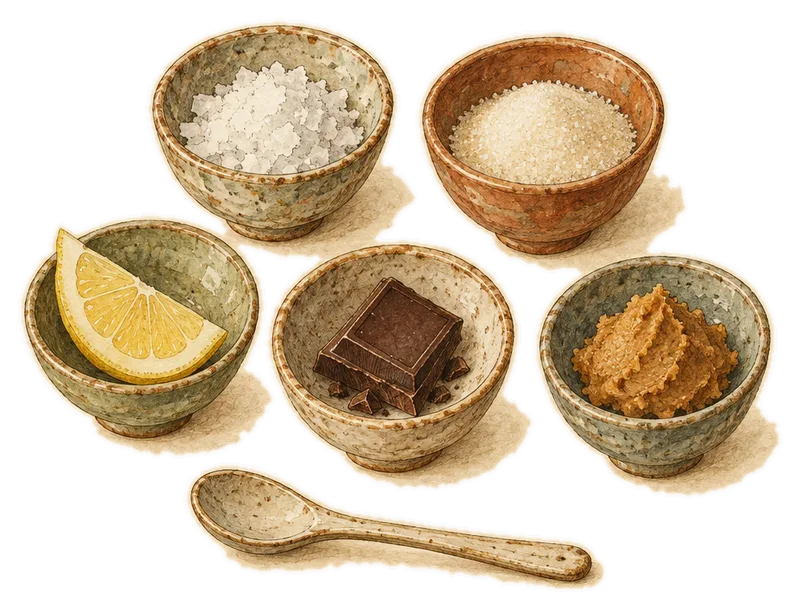 How tastes change one another
 Bitter: the warning sensor that became a pleasure
Something not right, or a question about it? Write to me →
Sources · 2
- Talavera et al.: Heat activation of TRPM5 underlies thermal sensitivity of sweet taste. Nature 438 (2005)
- Harold McGee: On Food and Cooking (2004), Kapitel Zucker und Geschmack