
Bitter: the warning sensor that became a pleasure
Also searched as: bitter, bitterness, too bitter, reduce bitterness, bitter compounds
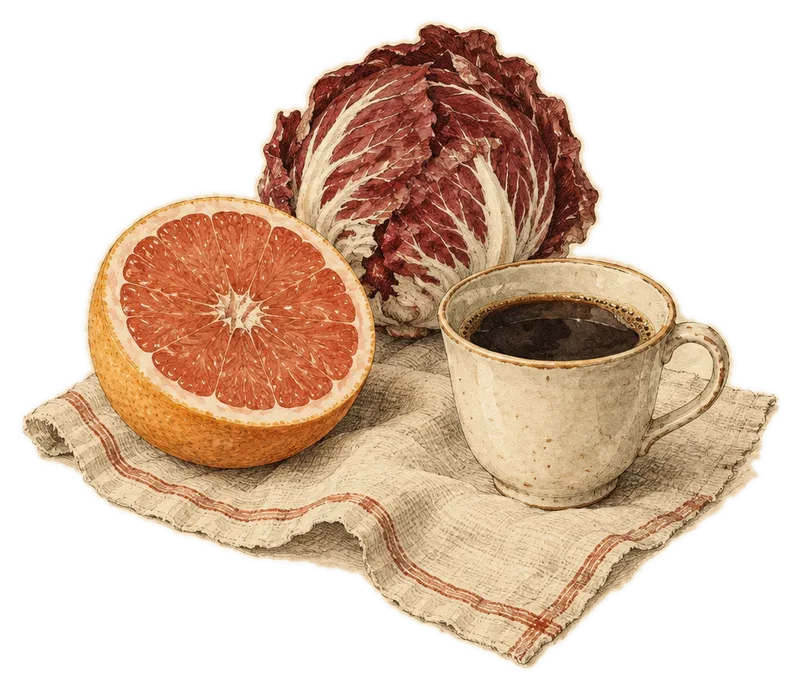
In short: Bitterness originally warns of poison. In small amounts it gives depth to coffee, chocolate, beer and salads, and salt can tone it down.
Like the bass voice in a choir: alone it sounds gloomy, in harmony it gives a foundation.
What happens
The tongue has around two dozen different sensors for bitter compounds. Many plant poisons taste bitter, so we are sensitive to it, children even more than adults. How strongly someone perceives bitterness is partly inborn. Salt demonstrably dampens bitterness; sugar and fat mask it.
Why it matters
Explains why salt makes grapefruit and Brussels sprouts milder, why children avoid chicory and why burnt garlic can tip a dish over.
Rules of thumb
- Too bitter: first a pinch of salt, then something sweet or fatty.
- Combine bitter leaves such as chicory or radicchio with sweet fruit and salty cheese.
- Do not roast garlic and nuts too dark: past a certain point roasted flavour tips into bitterness.
Levers
2
In practice
2
Coffee and tea
Too fine a grind or too long a brew dissolves more bitter compounds.
Vegetables
Brussels sprouts, chicory and endive like salt, fat and a little sweetness.
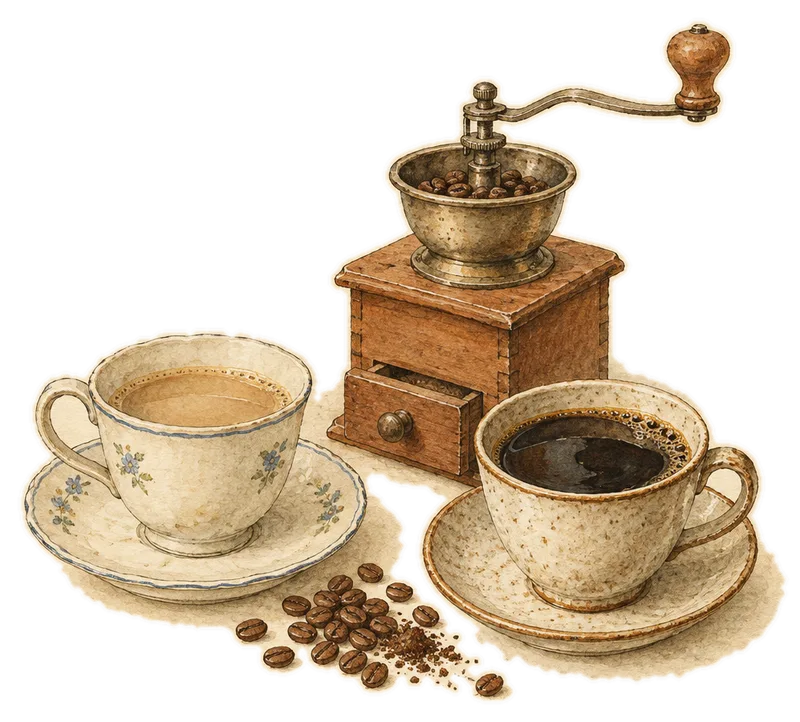 Coffee tastes sour or bitter
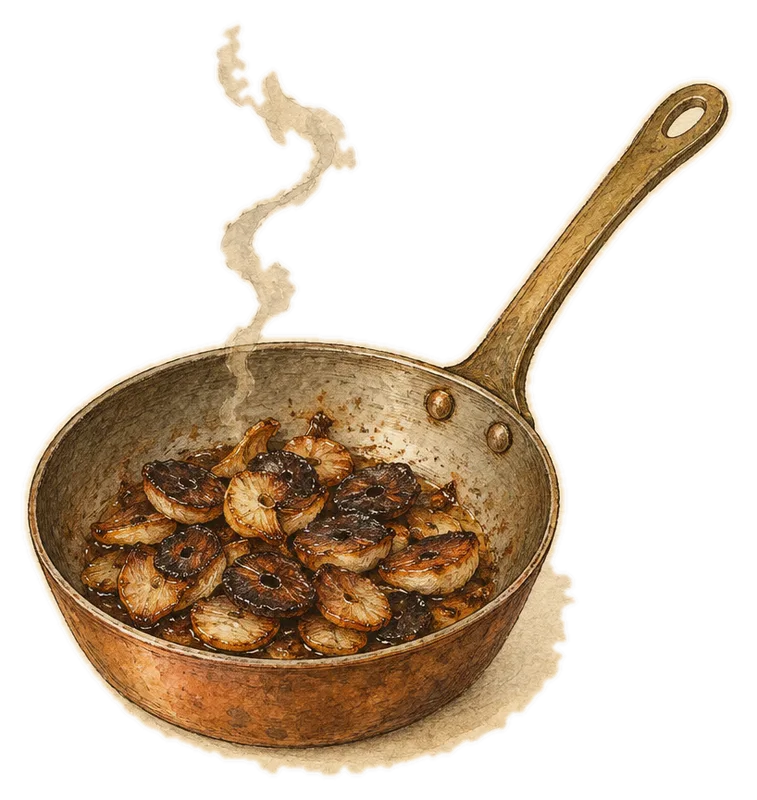 Garlic turns bitter
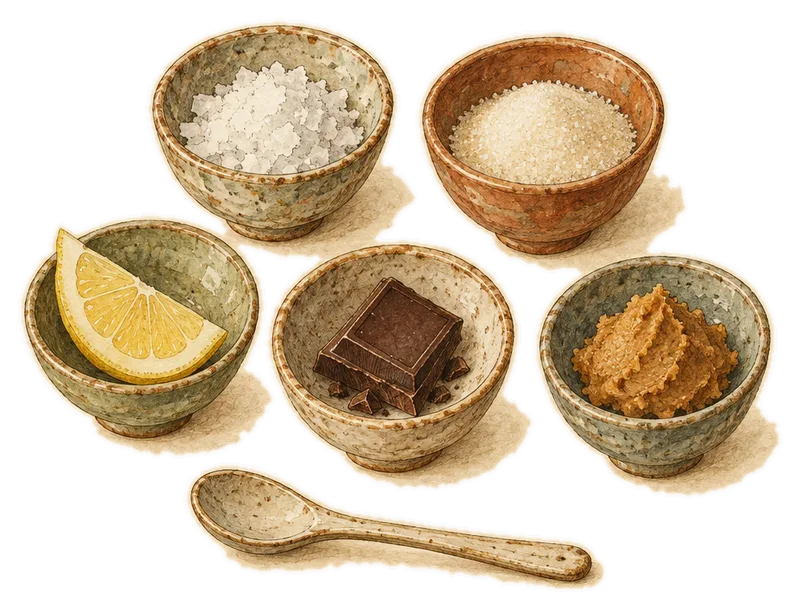 How tastes change one another
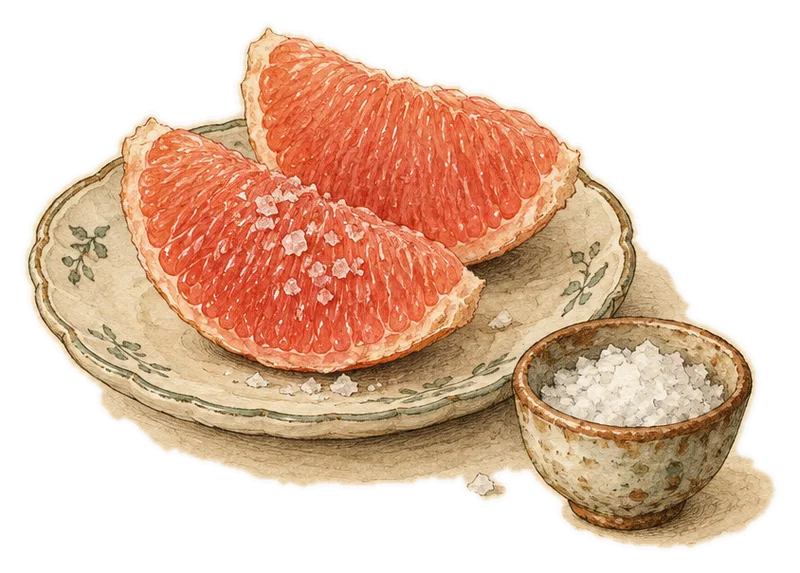 A pinch of salt makes grapefruit sweeter
 Sweet: why warm tastes sweeter
Something not right, or a question about it? Write to me →
Sources · 2
- Breslin, Beauchamp: Salt enhances flavour by suppressing bitterness. Nature 387 (1997)
- Harold McGee: On Food and Cooking (2004), Kapitel Geschmack und Aroma