
Making sauerkraut
Also searched as: making sauerkraut, fermenting cabbage, pickling white cabbage, fermentation
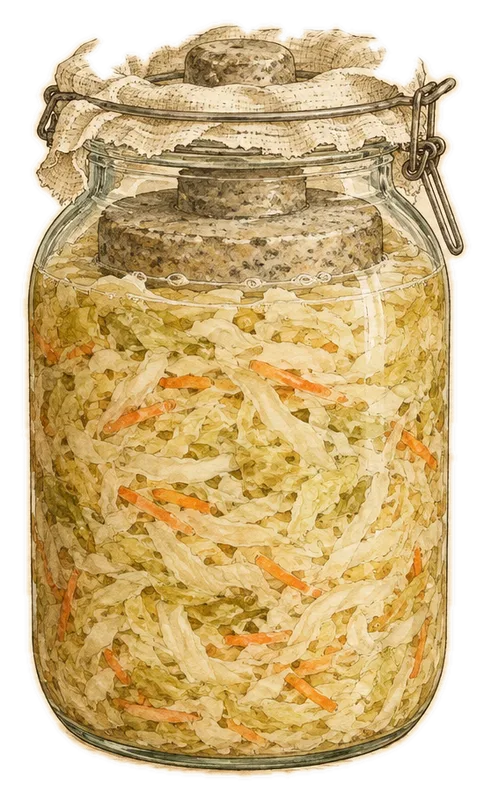
In short: Cabbage with about 2 % salt ferments into sauerkraut in three to four weeks. Lactic acid bacteria make it sour and long-lasting.
Like a castle training its own guards: the salt keeps strangers out until the lactic acid bacteria take over the gate.
- 1 kg white cabbage
- 20 g non-iodised salt (about 2 % of the cabbage weight)
- large jar or fermentation crock
- weight to press it down, clean cloth
Skim off a white film on the brine (kahm yeast). Furry, coloured mould or a rotten smell: throw it away.
Step by step: what happens
- 1Slice the cabbage finely and knead it hard with the salt
draws juice out of the cells. After a few minutes the cabbage is standing in its own brine.
Osmosis: salt and sugar draw out water - 2Press it firmly into the jar until brine covers it, then weigh it down
Under the brine there is no oxygen: mould cannot grow, but lactic acid bacteria can.
Lactic acid fermentation - 3Leave at about 21–24 °C, always keeping the cabbage under the brine
The bacteria make lactic acid. Warmer and it turns soft; below about 15 °C it hardly ferments.
Lactic acid fermentation - 4After 3–4 weeks, when it no longer bubbles, chill it
The acidity is now so high that hardly any germ can grow.
Bacteria and temperature: the danger zone
Result
About 1 kg of sauerkraut.
Keeps for
Several months in the fridge.
What to use it for
- Raw as a salad: full of live bacteria.
- Cooked with sausage, bacon and potatoes.
Sources · 2
- University of New Hampshire Extension: Fermenting, safe food preservation
- Harold McGee: On Food and Cooking (2004)