
Making yoghurt
Also searched as: making yoghurt, natural yoghurt, yoghurt in the oven, yoghurt without a machine, homemade yogurt
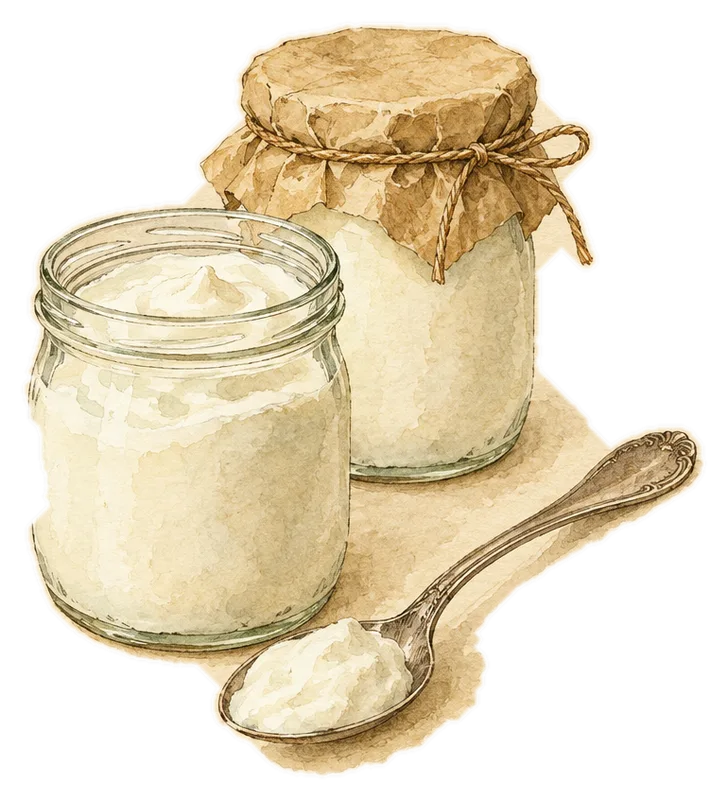
In short: Lactic acid bacteria turn warm milk into yoghurt overnight. A few spoonfuls of shop-bought yoghurt are enough as a starter.
Like yeast in dough, only for milk: a few workers are enough, and overnight they become billions.
- 1 l milk
- 2 tbsp natural yoghurt with live cultures
- pot, thermometer
- clean jars
- oven with the light on, or a hot-water bottle in a cool box
Work cleanly. If the yoghurt smells rotten, is pink or mouldy: throw it away.
Step by step: what happens
- 1Heat the milk to 85–90 °C and hold it for about 10 minutes
The heat changes the whey protein. Later it binds more water, and the turns thicker.
Proteins change (denaturation) - 2Let it cool to 43–46 °C
Yoghurt bacteria work best in this range. Above about 48 °C they die.
- 3Stir a little milk smooth with the yoghurt, then mix everything
That way the bacteria spread evenly.
- 4Fill into jars and keep warm for 4–12 hours without moving them
The bacteria turn sugar into lactic acid. The acid makes the milk protein set into a gel.
Lactic acid fermentation - 5As soon as it is firm, into the fridge
Cold slows the bacteria: the longer it stays warm, the more sour it gets.
Bacteria and temperature: the danger zone
Result
About 1 l of yoghurt. Drained in a cloth, it becomes Greek yoghurt or labneh.
Keeps for
About a week in the fridge. Two spoonfuls of it are the starter for the next batch.
What to use it for
- For breakfast, for raita against spicy heat, for marinades.
- Drained as labneh with olive oil.
Sources · 2
- Leite’s Culinaria: How to make homemade yogurt
- Harold McGee: On Food and Cooking (2004)