
Lab recipebeginnerdraft
Pectin from apple scraps
Also searched as: apple pectin, homemade pectin, setting agent from apples, natural pectin
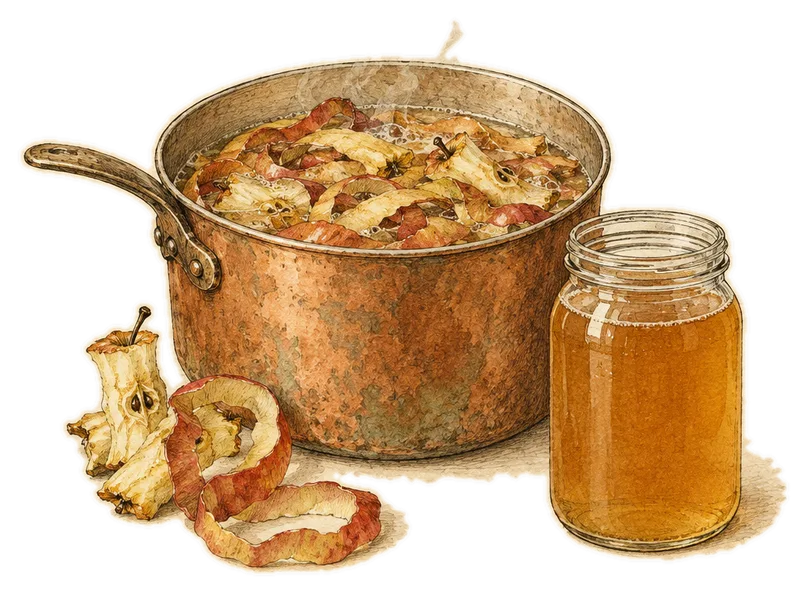
In short: The peels and cores of tart apples are full of pectin. Simmered out and reduced, they become a natural setting agent.
Picture it
Like paste from the craft cupboard: unremarkably runny, but it holds together what would not hold on its own.
Before · Aftersimmered
You need · 1 day, of which 1½ hours of work
- 1–1.5 kg tart apples, or peels and cores (e.g. from apple cake, collected in the freezer)
- water, just enough to cover
- pot, sieve, fine cloth
- a cold plate for the test
Step by step: what happens
- 1Chop the apples roughly, cover with water and simmer, covered, for 40–60 minutes
Heat releases the from the cell walls into the water.
Vegetables soften (pectin breakdown) - 2Let it drip through a cloth overnight; do not squeeze
Squeezing makes the juice cloudy.
- 3Reduce the juice by half, uncovered
The pectin concentrates.
Reducing (reduction) - 4Plate test: let a spoonful with a little sugar and lemon cool on a cold plate
If it sets and wrinkles when pushed, there is enough pectin. Otherwise reduce further.
Setting with pectin
Result
About 500 ml of pectin juice (as a guide).
Keeps for
A week in the fridge; frozen in portions, many months.
What to use it for
- For jam from low-pectin fruit such as strawberries, cherries or pears: about 250 ml per 1.5 kg of fruit (as a guide).
- For jelly.
Related entries
Sources · 2
- Nourish and Nestle: How to make apple pectin stock
- Harold McGee: On Food and Cooking (2004)