
Worldbeginnerdraft
Meat
Also searched as: steak, roast, beef, pork, veal
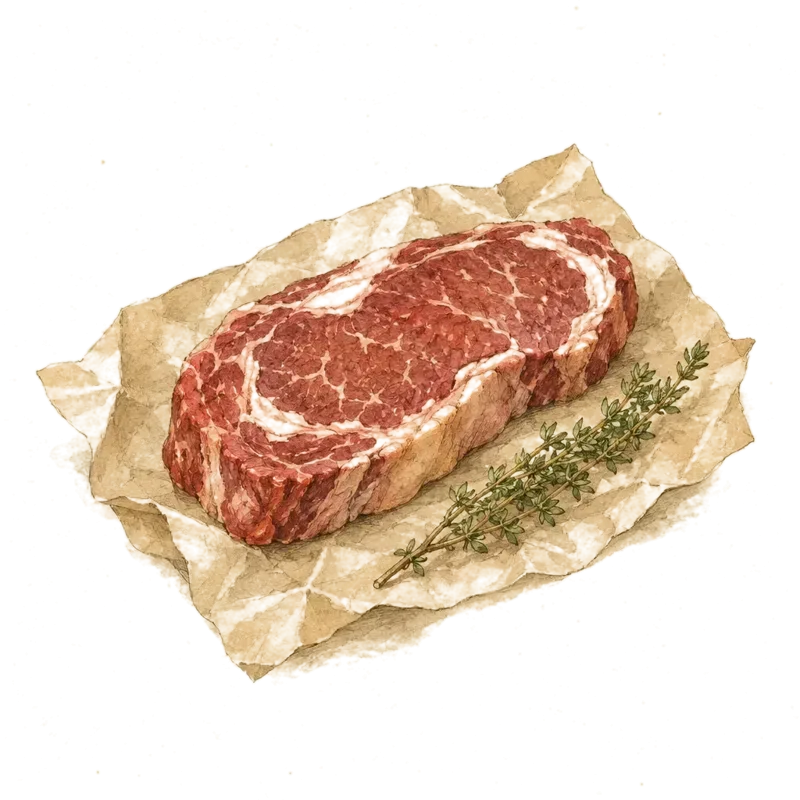
In short: Meat is muscle: bundles of protein fibres, full of water, held together by connective tissue. Cooking means deciding how firm the fibres get and what happens to the connective tissue.
Picture it
Like a bundle of wet sponges in a net: squeeze too hard and the water runs out. Dissolve the net slowly and everything falls tenderly apart.
What happens
When heated, the muscle fibres contract and squeeze out juice: the hotter, the more. Connective tissue is tough but dissolves into gelatine in long, moist heat. On the outside, dry, strong heat creates crust and roasted aromas.
Why it matters
From this follow the two great paths: cook tender cuts briefly and precisely; braise cuts with lots of connective tissue long and slow.
Rules of thumb
- Quick frying for tender cuts with little connective tissue (fillet, entrecôte, rump).
- Braising for cuts with lots of connective tissue (shoulder, shin, cheek, boiling beef).
- A meat thermometer replaces any gut feeling.
Related entries
Sources
- Harold McGee: On Food and Cooking (2004), Kapitel Fleisch
- ThermoWorks: How Meat Cooks – Heat’s Effects on Muscle Fibers