
Meat is tough
Also searched as: tough, chewy, stringy, tough goulash
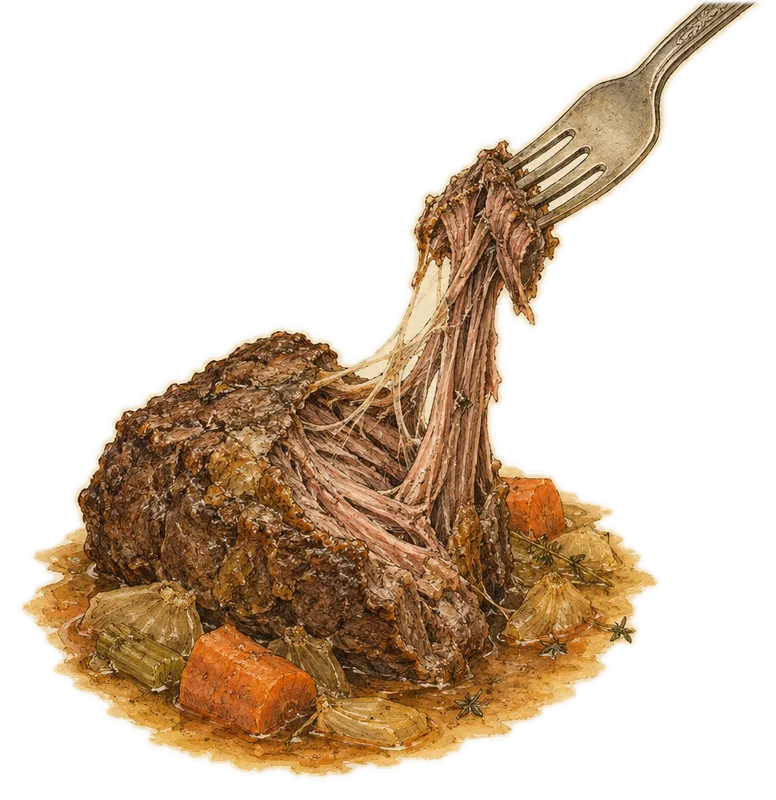
In short: Either the fibres contracted too much, or the connective tissue did not have enough time to dissolve.
Two different knots: one pulled too tight, one not yet undone. Both feel the same in the mouth.
What happened in your kitchen?
Was it braised or fried quickly?
All causes, by frequency
5
- Braising cut cooked too briefly
Connective tissue needs hours to turn into gelatine. After an hour it is often tougher than at the start.
Next time: Keep braising until a fork slides in without resistance · Check by feel, not by the clock
- Wrong cut for the method
Cuts with lots of connective tissue are always tough when fried quickly.
Next time: Braise shoulder, shin, cheek · For quick frying choose fillet, entrecôte or rump
- Quick-cooked meat overcooked
Above about 66 °C the fibres contract strongly and turn firm.
Next time: Fry with a thermometer · Take it off earlier
- Braising liquid boiled hard
Too much heat squeezes out the fibres before the connective tissue softens. The meat turns dry and stringy.
Next time: Let it simmer gently only · Braise in the oven at 140–150 °C
- Cut along the grain
Long fibres in the mouth feel tough, even when the meat is cooked right.
Next time: Slice across the grain
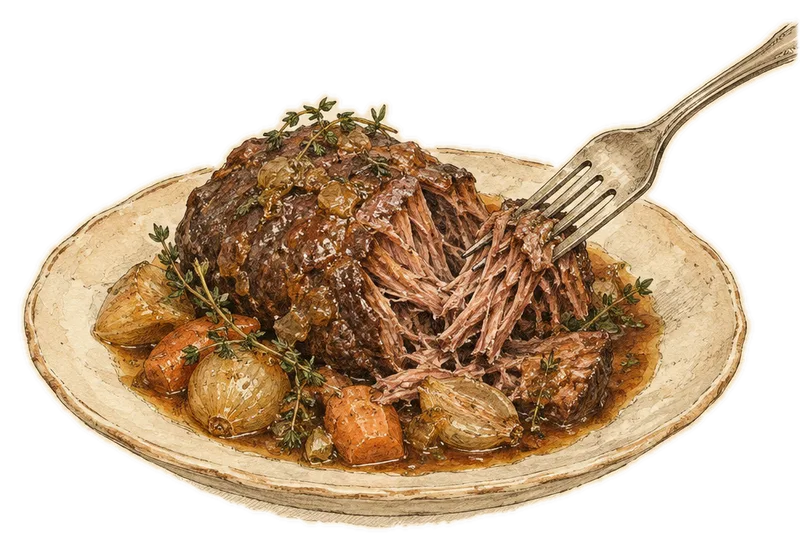 Tender