
Starting a sourdough
Also searched as: making a sourdough starter, sourdough starter, starter, levain
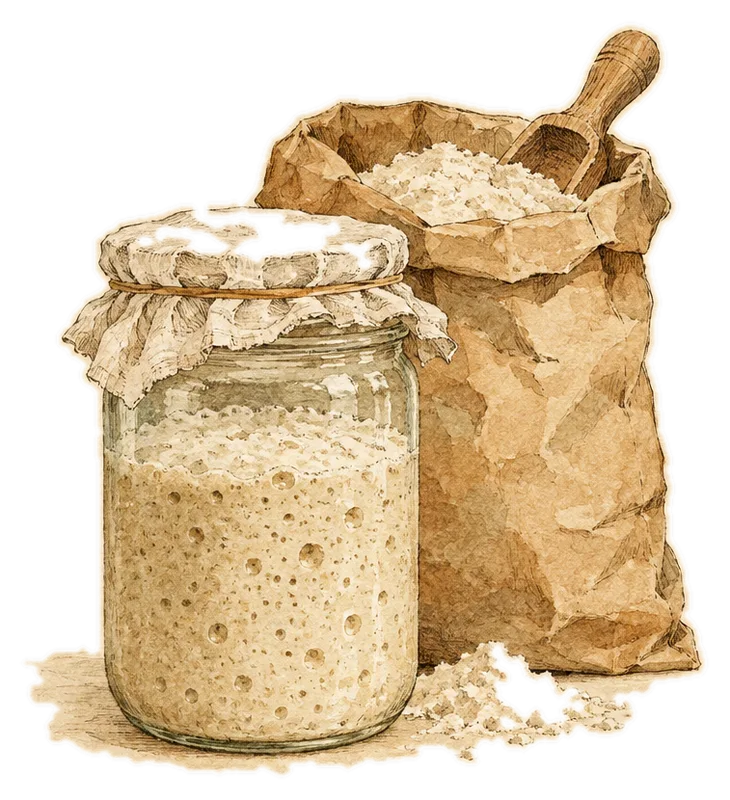
In short: Flour and water become a sourdough in about a week: wild yeasts and lactic acid bacteria from the flour multiply if you feed them regularly.
Like a garden from seeds already in the soil: you sow nothing, you only water and weed.
- wholemeal wheat or rye flour to start
- white flour for feeding
- water
- jar with a loose lid
- scales
If it smells rotten, is pink or orange, or has furry mould: start again.
Step by step: what happens
- 1Day 1: mix 50 g wholemeal flour and 50 g water and leave for 24 hours
Wild yeasts and lactic acid bacteria live in flour. Wholemeal brings especially many.
Lactic acid fermentation - 2Day 2: discard all but 50 g and feed with 50 g flour and 50 g water
Discarding keeps the amount small; fresh flour provides new food.
- 3From day 3 feed like this twice a day, kept warm at about 21–26 °C
The bacteria's acid crowds out unwanted germs, and the yeasts get stronger.
Lactic acid fermentation - 4Ready when it doubles within 6–8 hours of feeding
Then there are enough yeasts to raise a loaf.
Yeast fermentation
Result
An active sourdough that smells pleasantly sour and is full of bubbles.
Keeps for
Keep it in the fridge and feed it about once a week. A grey film of liquid on top means hunger, not spoilage: pour it off and feed.
What to use it for
- For sourdough bread, pizza and sourdough Zopf.
- The discard from feeding for pancakes or crackers.
- King Arthur Baking: Sourdough starter
- Harold McGee: On Food and Cooking (2004)