
Lab recipebeginnerdraft
Making mascarpone
Also searched as: making mascarpone, mascarpone substitute, tiramisu cheese
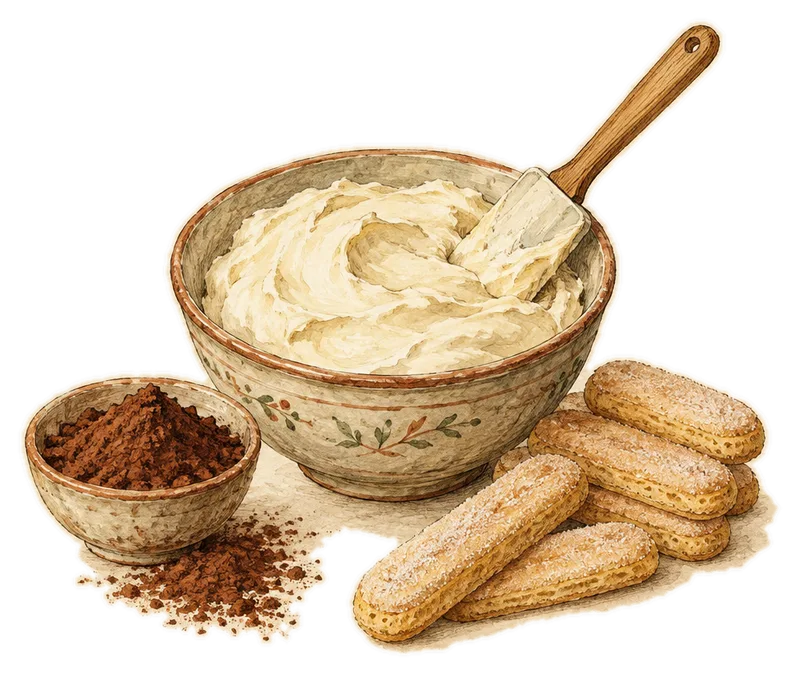
In short: Mascarpone is cream thickened in the heat with a little acid and then drained. It needs only two ingredients.
Picture it
Like whipped cream in slow motion: without a whisk, the cream thickens through warmth and acid alone.
Before · Aftercream
You need · 8–9 hours, of which 10 minutes of work
- 500 ml double cream
- ½ tsp citric acid dissolved in 4 tbsp water (or 2 tbsp lemon juice)
- pot, thermometer
- sieve lined with a fine cloth
Step by step: what happens
- 1Warm the cream slowly to about 82 °C
The heat prepares the milk protein to react with the acid.
Proteins change (denaturation) - 2Stir in the acid and hold at this temperature for 2 minutes
As with fresh cheese, the protein particles lose their charge. But because has so much fat, nothing flocculates: it just thickens creamily.
Acid cooks protein - 3Take off the heat and rest for 30 minutes
As it cools, the protein network between the fat droplets firms up.
Emulsion - 4Drain in the cloth in the fridge for 6–8 hours
Only a little whey drips off. Cold makes the milk fat set, so it becomes spreadable.
Fat crystallises (tempering)
Result
A thick, smooth cream, a little less than the amount of cream (as a guide).
Keeps for
4–5 days in the fridge.
What to use it for
- Tiramisu, cheesecake, risotto at the end instead of butter.
- With sugar and vanilla as a filling.
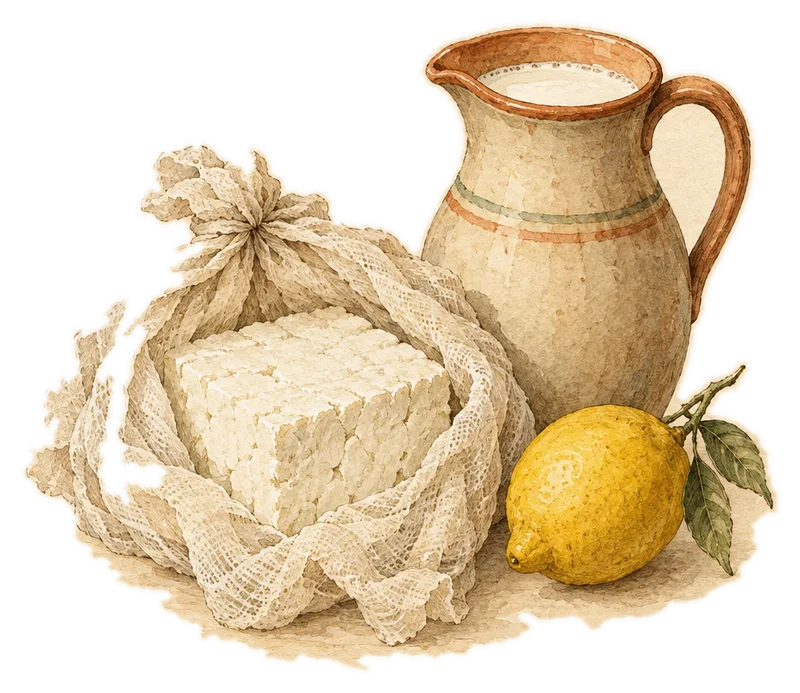 Fresh cheese with lemon (paneer)
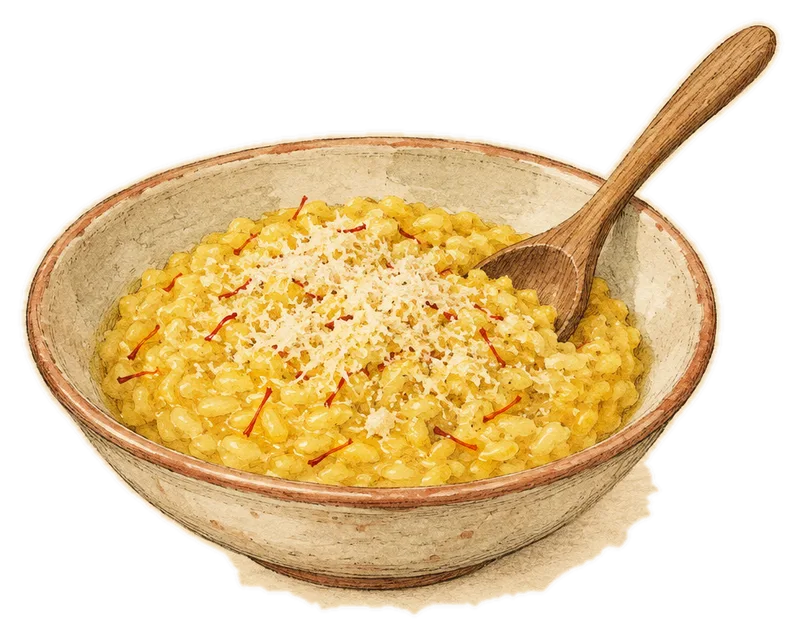 Risotto
Sources · 2
- Cheese Grotto: Homemade mascarpone with citric acid
- Harold McGee: On Food and Cooking (2004)