
Garum: the Roman fish sauce
Also searched as: garum, liquamen, fish sauce, Roman fish sauce, colatura di alici
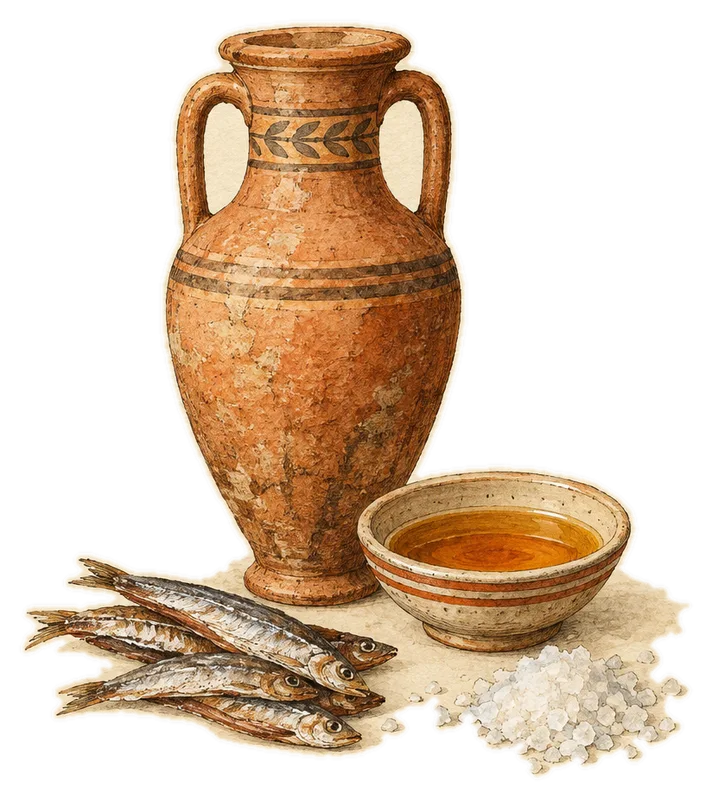
In short: Garum was the seasoning sauce of the Romans: fish and lots of salt, left for months until the fish's own enzymes had broken its protein down into savoury umami. This site is named after it.
Like a house dismantled from the inside: the workers already lived there, and the salt simply locks out the looters.
What happens
The Romans layered small fish or fish innards with salt in vats and left them in the warmth. The large amount of salt keeps putrefying bacteria away. The digestive in the fish keep working, though, and break protein down into its building blocks (). Among them is plenty of , the carrier of umami. After a few months the clear, amber liquid was skimmed off: the garum.
Why it matters
Garum shows that umami seasoning is no modern trick. Thai and Vietnamese fish sauce, Italian colatura di alici and Worcestershire sauce work on the same principle. Modern high-end kitchens now call any seasoning this way a garum, including ones made from meat, mushrooms or bee bread.
Rules of thumb
- A few drops of fish sauce in tomato sauce, a braise or a dressing add depth without tasting of fish.
- Fish sauce is very salty: season with it first, then add salt.
- Do not ferment fish sauce yourself in the sun: without the right amount of salt and proper control, dangerous germs can grow. Use bought sauce.
Levers
2
In practice
2
Sauces
A splash of fish sauce rounds off a Bolognese, just as garum once did in Roman cooking.
Fish and seafood
Colatura di alici, made from anchovies, is the direct descendant of garum.
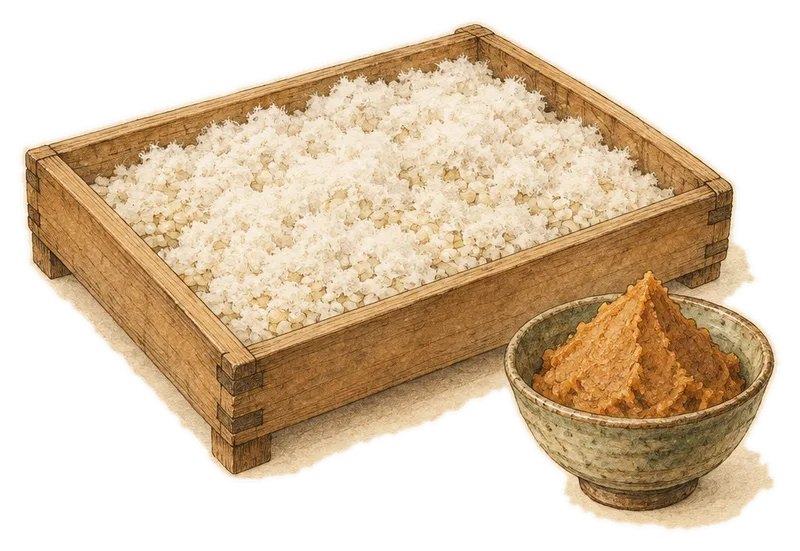 Koji: the mould behind miso and soy sauce
 Fish and seafood
Something not right, or a question about it? Write to me →
Sources · 3
- Robert I. Curtis: Garum and Salsamenta. Production and Commerce in Materia Medica (1991)
- Mother Jones: How a smelly fish sauce helped solve one of ancient Rome's mysteries
- René Redzepi, David Zilber: The Noma Guide to Fermentation (2018), Kapitel Koji und Garums