
Dishintermediatedraft
Roast chicken
Also searched as: whole roast chicken, roasted chicken
In short: Crisp skin and juicy meat at once: the skin needs dryness and heat, the breast must not get too hot.
Picture it
Like a coat and its wearer: the coat should be dry and crisp, the wearer warm but not sweaty.
The decisive moments
- 1Salt all over the day before and store uncovered in the fridge
The salt seasons right through and keeps juice in the meat; the skin dries in the air.
Dry brining - 2Roast at 200–220 °C, uncovered (as a guide)
Dry heat renders the fat in the skin and browns the surface.
Maillard reaction - 3Check with a thermometer: breast at least 70 °C, leg better at 75–80 °C
The leg has more connective tissue and gets more tender with a little more heat; too much makes the breast dry.
Core temperature - 4Rest for 10 minutes, then carve
The juices redistribute in the meat and run out less when carving.
Resting meat
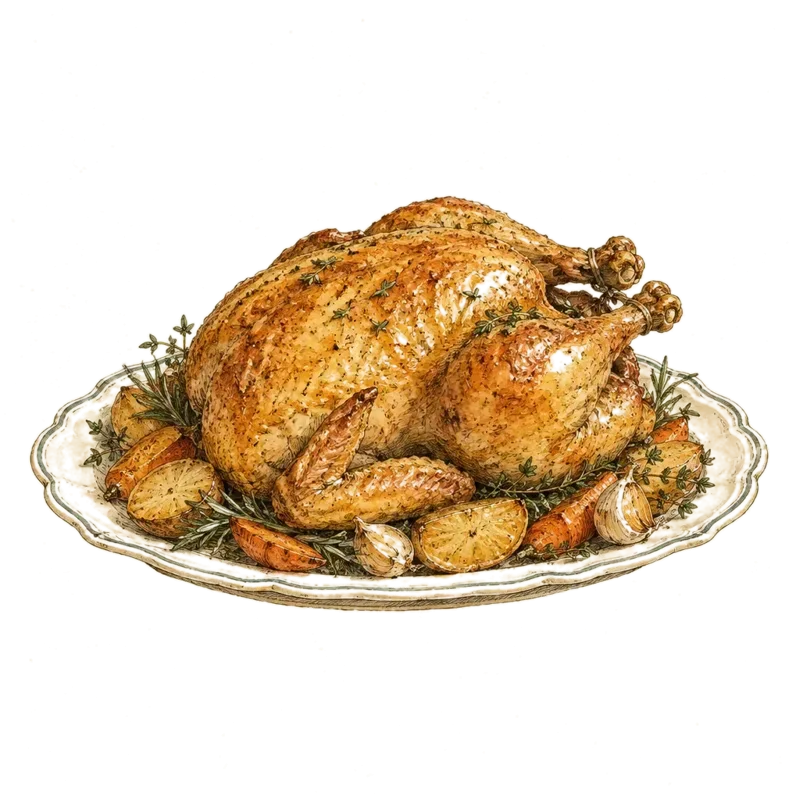 Poultry
Sources · 1
- Harold McGee: On Food and Cooking (2004), Kapitel Fleisch: Geflügel