
Proteins change (denaturation)
Also searched as: cooking protein, doneness, cooking through, meat turns firm
In short: Heat makes the protein strands in meat curl up. Up to about 60 °C it stays juicy; above that the fibres squeeze out more and more juice.
Like wringing out a wet towel: twisted lightly it stays damp, twisted hard everything drips out.
Simplified model
Temperature thresholds
4
- 50 °Cprotein cooks, stays tender
- 60 °Cend of the juicy window
- 66 °Cfibres squeeze out a lot of juice
- 73 °Cfirm and dry
Below 50 °C none of this happens yet. From 50 °C: protein cooks, stays tender.
What happens
Muscle fibres are made of long protein strands. From about 50 °C the first protein changes; the meat goes from raw to cooked but stays tender. Between about 66 and 73 °C a second protein contracts strongly, the fibres firm up and squeeze out a lot of juice. That is why the window for quick-cooked cuts lies roughly between 50 and 60 °C .
Why it matters
Explains why a few degrees make the difference between juicy and dry, and why a thermometer helps so much.
Rules of thumb
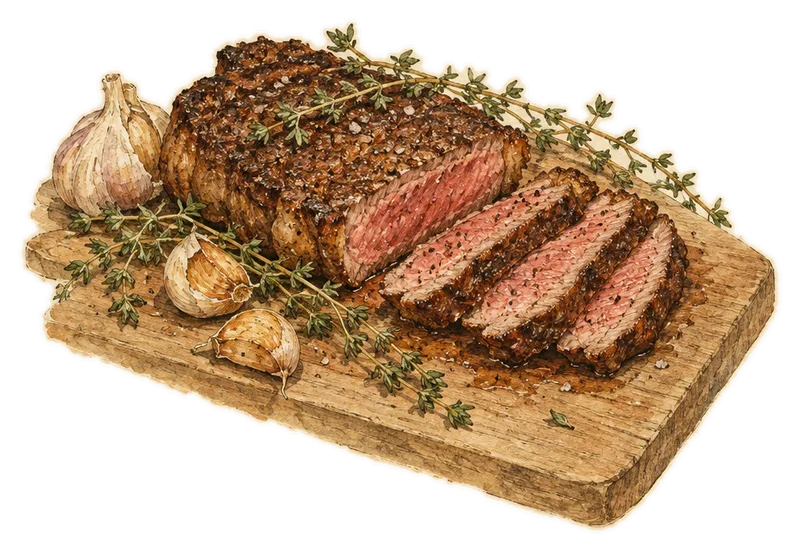
- Quick-cooked beef: pink at about 54–57 °C core , as a guide.
- Take it off before it reaches the target: adds a few more degrees.
- Lean meat is less forgiving than fatty meat.
Levers
2
Common mistakes
1
- Cooking by feel and only stopping once there is no pink left.
In practice
3
Meat
Steak and fillet in the window around 55 °C. Pork fillet about 60–63 °C, as a guide.
Fish and seafood
Fish is even more delicate: it firms up from about 50 °C and falls apart with too much heat.
Eggs
Egg is protein too: the white sets earlier than the yolk, which is why soft-boiled eggs have a runny yolk.
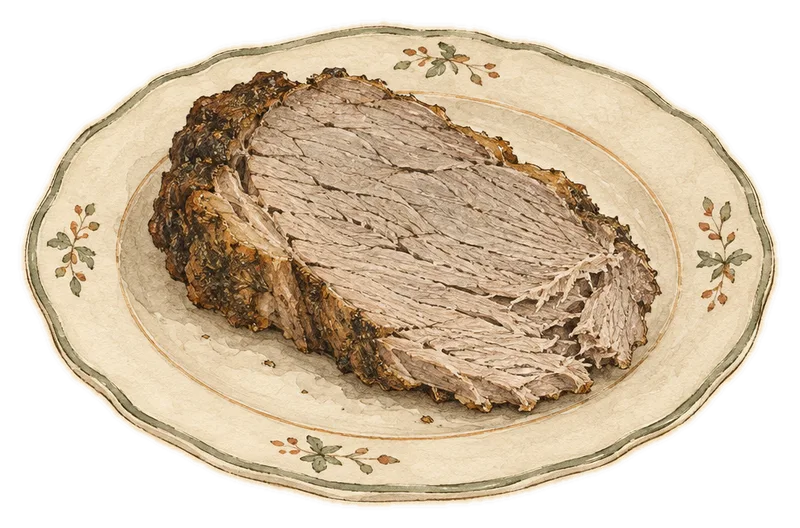 Meat is dry
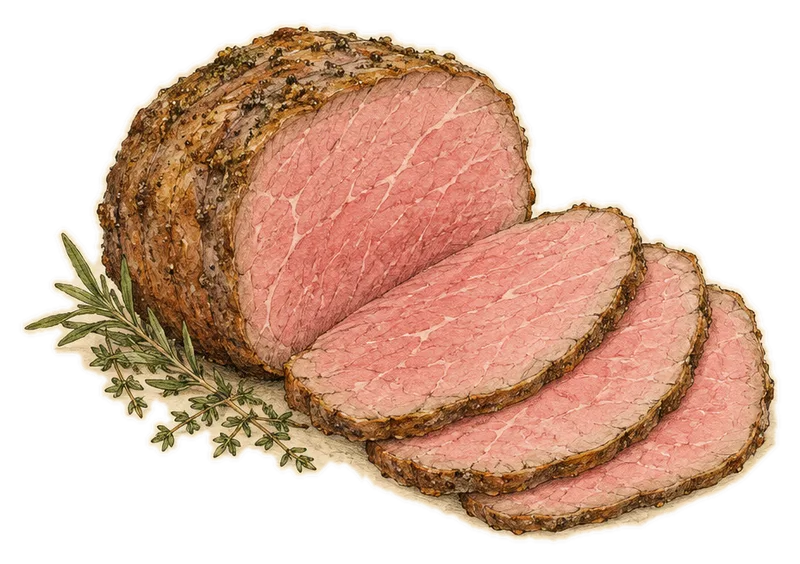 Evenly cooked
Sources · 2
- ThermoWorks: How Meat Cooks – Heat’s Effects on Muscle Fibers
- Harold McGee: On Food and Cooking (2004), Kapitel Fleisch