
Experimentbeginnerdraft
Why pineapple stops jelly from setting
Also searched as: pineapple gelatine experiment, runny jelly, pineapple jello
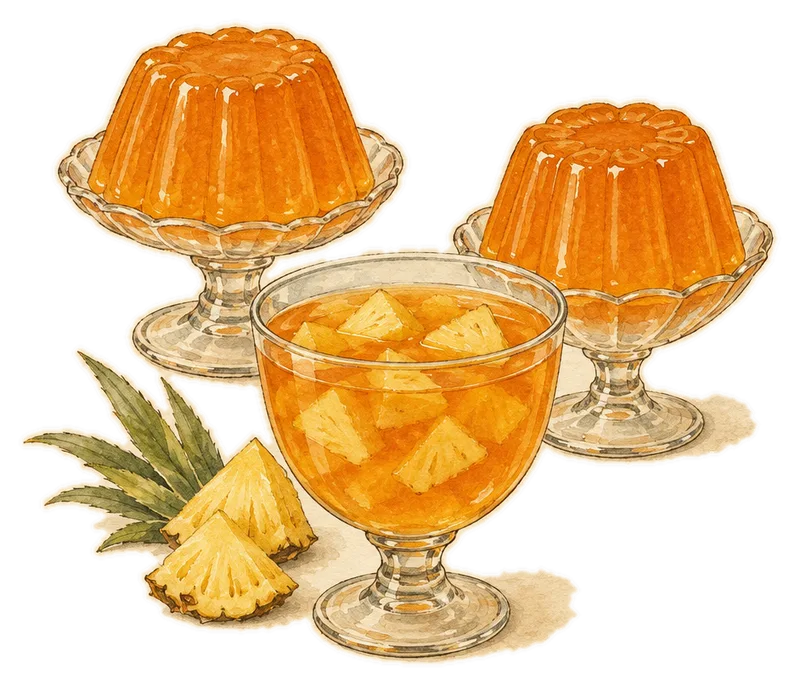
In short: With fresh pineapple, gelatine stays runny; with cooked pineapple, it sets.
Picture it
Like mice nibbling through a net: before it can set, it has already been cut to pieces.
Before · Afterjust poured
You need · a few hours
- 1 packet of jelly, or gelatine with juice
- fresh pineapple
- tinned pineapple
- three glasses
Hot water for the jelly: adults do the heating.
How it’s done
Sequence · Step 1 of 4
Make the jelly as the packet says and divide it between three glasses.
All steps as a list
- Make the jelly as the packet says and divide it between three glasses.
- Add pieces of fresh pineapple to the first glass, tinned pineapple to the second, and leave the third plain.
- Put everything in the fridge for a few hours.
- Tip the glasses and compare.
What you see
Without pineapple and with tinned pineapple, the jelly sets. With fresh pineapple it stays runny, or only softens around the pieces.
Why it happens
Fresh pineapple contains an that cuts up protein. is protein, so its network is taken apart before it can set. When pineapple is tinned, the fruit is heated, which switches the enzyme off.
Sources · 1
- Harold McGee: On Food and Cooking (2004)