
Evaporation
Also searched as: water evaporates, steam, steaming off, evaporation
In short: Before a surface can get hotter than 100 °C, its water has to evaporate. That costs a lot of energy and time.
Like a pot of water on the stove: however strong the flame, the water does not get hotter than 100 °C. All the energy goes into evaporating.
Simplified model
Temperature thresholds
2
- 100 °Cwater evaporates, temperature stands still
- 140 °Cdry: browning possible
Below 100 °C none of this happens yet. From 100 °C: water evaporates, temperature stands still.
What happens
Water needs a great deal of energy to turn into steam. As long as a surface is wet, it therefore stays stuck at about 100 °C. Only once the water is gone does the temperature rise and browning or crispness begin. The steam needs a way out: if it cannot escape, it steams the neighbouring pieces.
Why it matters
Explains why drying, leaving space and heat make such a difference. It is the key behind crisp, brown and crust.
Rules of thumb
- Whatever goes into the pan wet stays stuck at 100 °C for a long time and does not brown.
- Steam has to be able to escape: space, no lid, a rack instead of a plate.
Levers
3
In practice
3
Potatoes
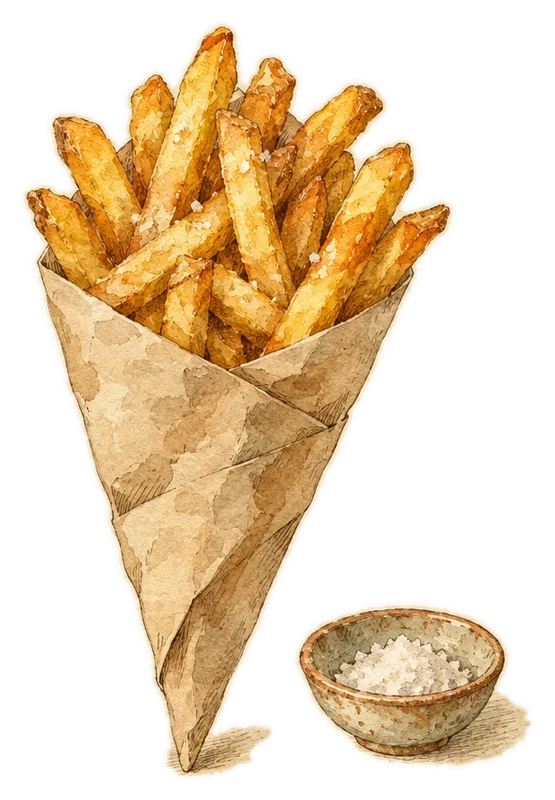
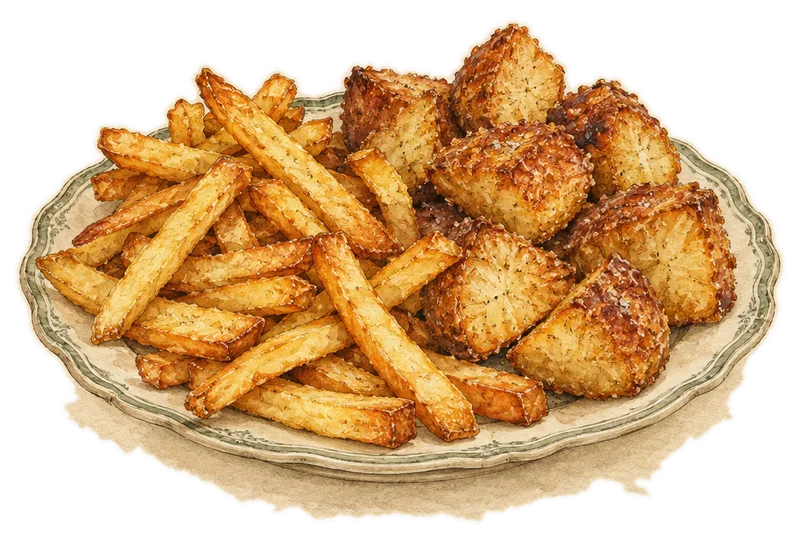
Soaked potatoes not dried: the water has to evaporate first, and the crust comes late.
Deep-fried food
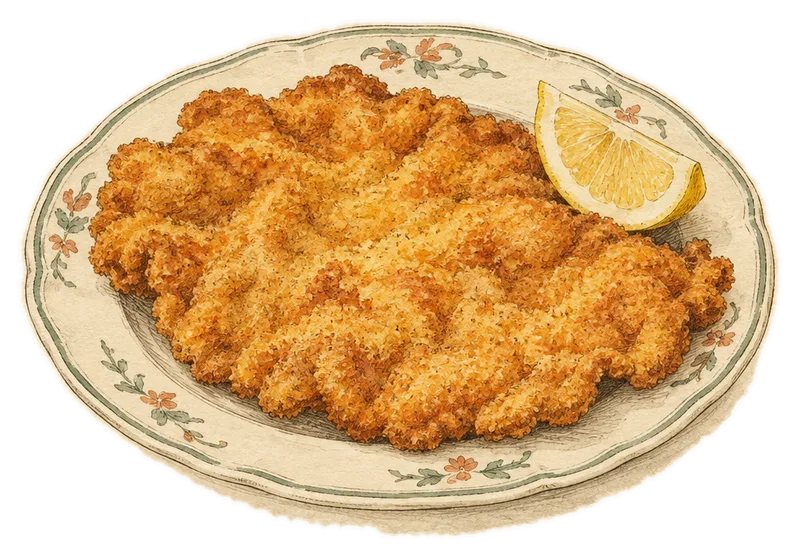
The bubbling in the oil is water evaporating. When it calms down, the surface is almost dry.
Meat
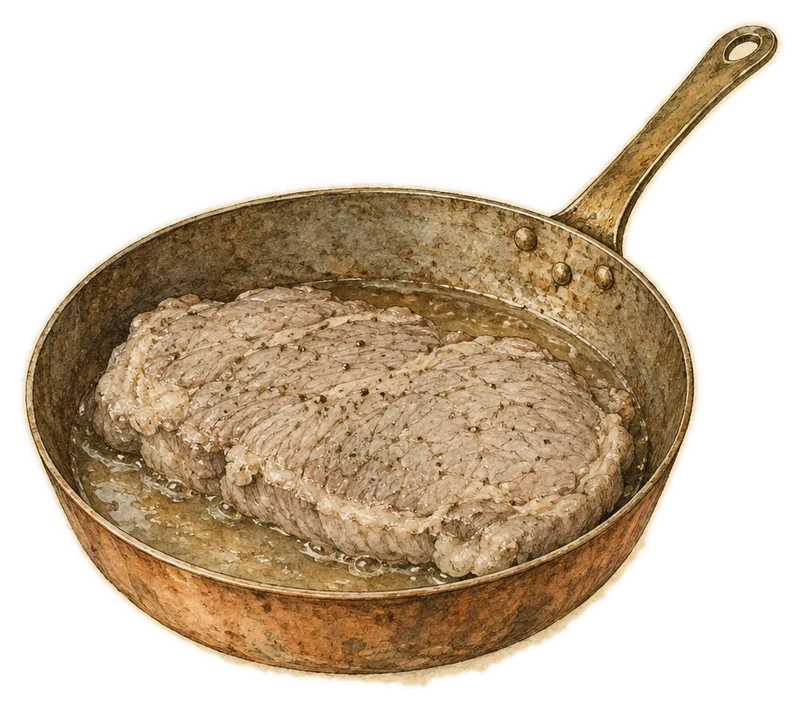
A full pan can no longer evaporate the juice that runs out. The meat stews grey.
 Crispy
 Steak turns grey instead of brown
Sources · 1
- Harold McGee: On Food and Cooking (2004), Kapitel Kartoffeln, Stärke, Frittieren