
Fan oven or conventional heat
Also searched as: fan oven, convection, top and bottom heat, conventional oven, which oven setting
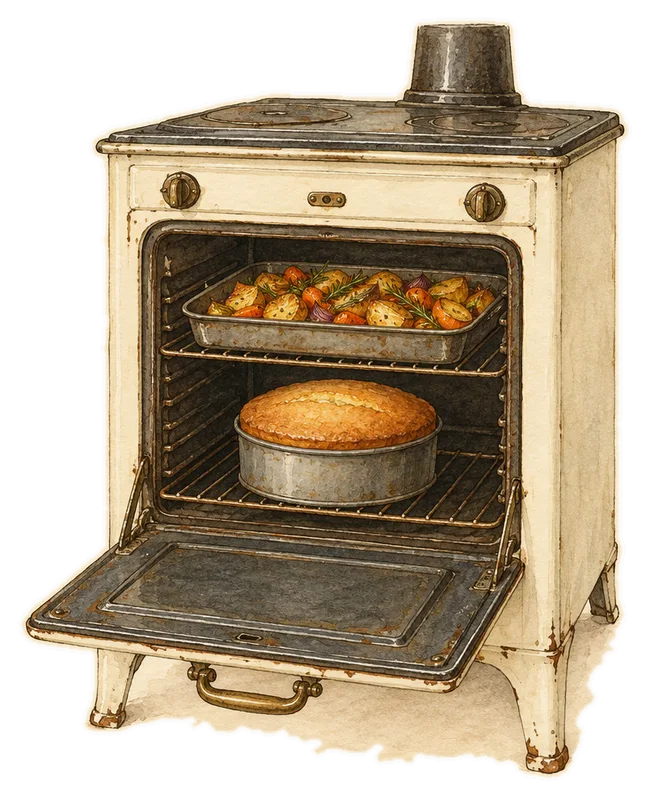
In short: A fan oven blows hot air over the food and cooks faster and drier; top and bottom heat is gentler and moister.
Like blowing on hot soup: moving air exchanges heat much faster than still air. In the oven it brings the heat to the food faster.
Conventional heat: gentle and moist. For cakes, sponge, soufflé, cheesecake and bread in the first minutes.
What happens
With top and bottom heat, two elements heat from above and below. The air is almost still, and a layer of cooler, moist air forms around the food. With the fan, hot air is blown over it constantly and strips this layer away. So more heat arrives, and the surface dries faster ().
Why it matters
Fast and dry means crisp and brown. Gentle and moist means doughs can rise before a firm crust forms.
Rules of thumb
- Fan oven: about 20 °C lower than a recipe written for conventional heat (as a guide).
- Several trays at once: use the fan, otherwise each tray bakes differently.
- Butter cakes, sponge, soufflé and cheesecake: conventional heat. The fan forms a crust too early, so the cake cracks or domes.
- For a crisp base on pizza or a tart: bake low in the oven and favour bottom heat.
- For browning a gratin at the end: top heat or the grill.
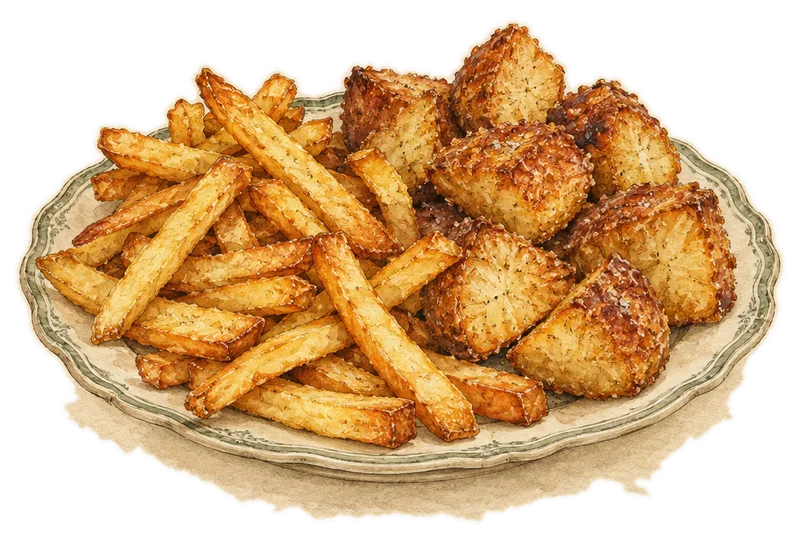 Crispy
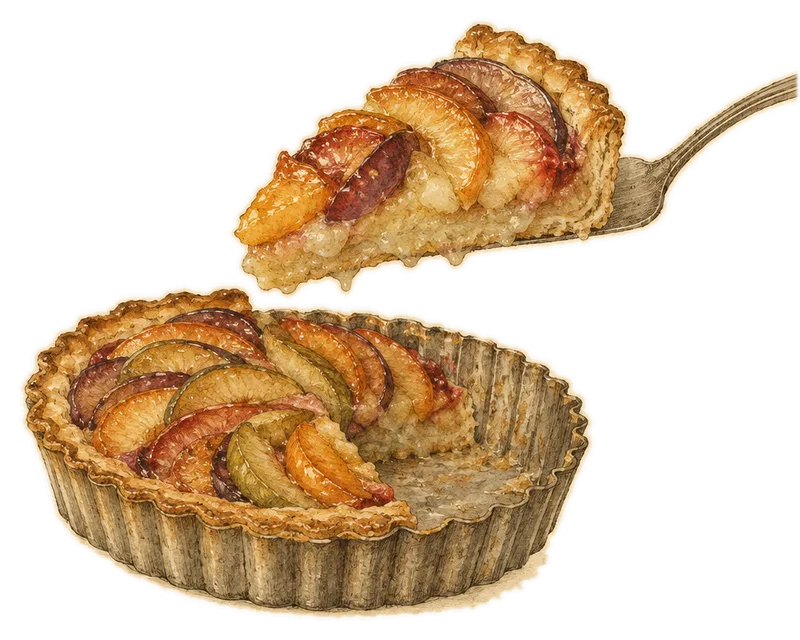 Soggy bottom
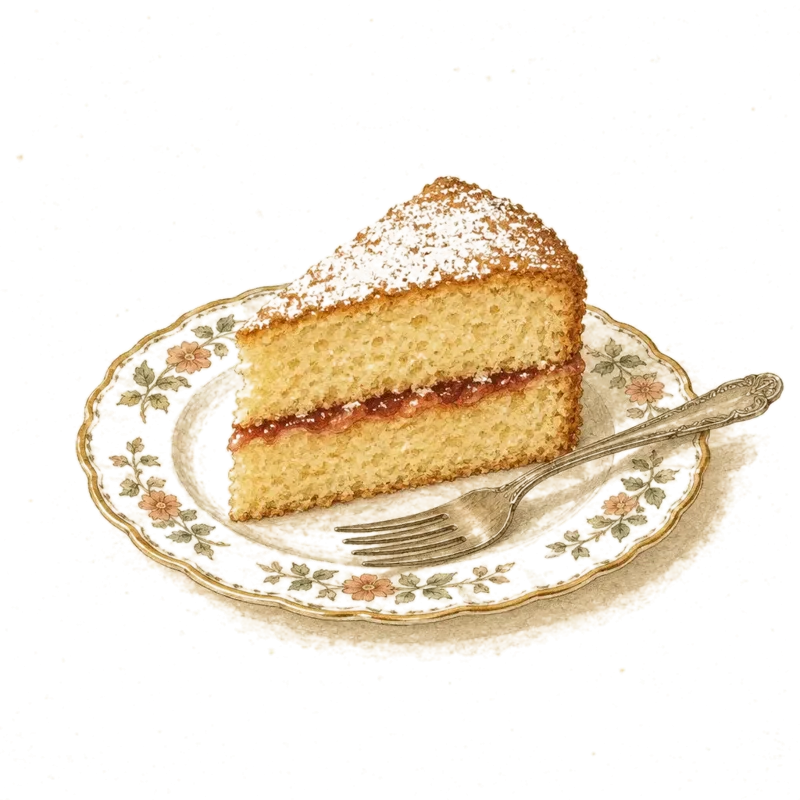 Cakes and baking
 Bread
Sources · 2
- Harold McGee: On Food and Cooking (2004), Kapitel Garmethoden: Ofen und Wärmeübertragung
- Serious Eats: Convection vs. conventional ovens