
Techniquebeginnerdraft
Braising
Also searched as: pot roast, ragù, braise, goulash, stew
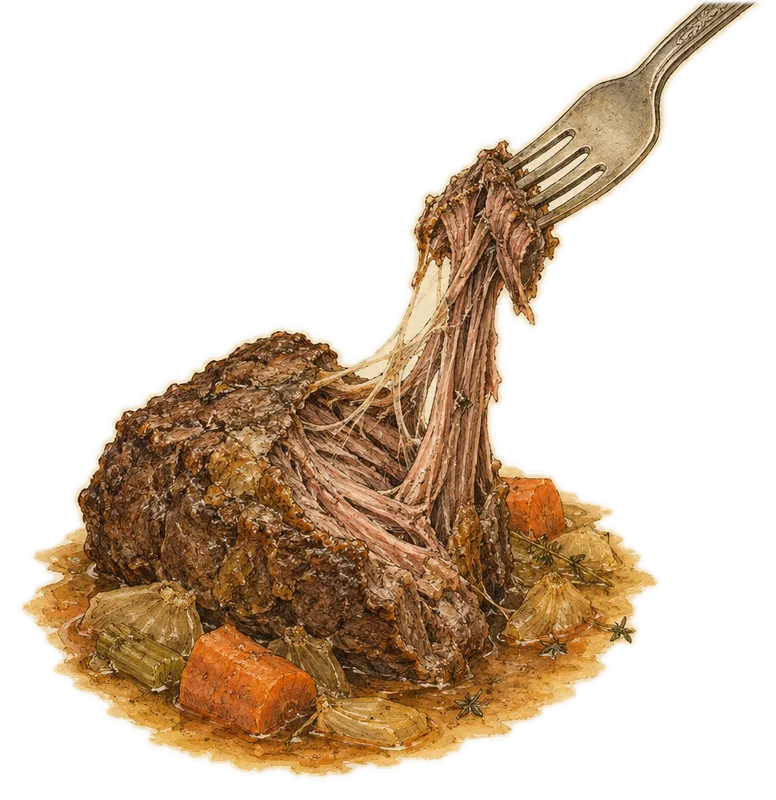
In short: Sear the meat, then cook it gently, covered, in a little liquid for hours. The connective tissue turns into gelatine and the meat turns tender.
Picture it
Like a long bath instead of a hot shower: the warmth has time to reach everywhere and loosen everything.
The temperatures40 °C
40 °CDrag to try120 °C
- 70 °Cconnective tissue starts to dissolve
- 88 °Cgentle simmer
- 100 °Cbubbling: too hot
Below 70 °C none of this happens yet. From 70 °C: connective tissue starts to dissolve.
What happens
brings roasted aromas into the meat and the pan residue. In the gently simmering liquid, the dissolves into gelatine over hours. If the liquid boils hard, the muscle fibres squeeze out too much juice and the meat turns dry and stringy.
Why it matters
Turns cheap, tough cuts into the most dishes of all.
How it’s done
Sequence · Step 1 of 5
Pat the meat dry and sear it hard in batches.
All steps as a list
- Pat the meat dry and sear it hard in batches.
- Brown the vegetables, deglaze the pan residue with wine or stock.
- Return the meat, liquid to about halfway up.
- Cover and simmer gently over low heat or in the oven at 140–150 °C.
- Check after 2–3 hours: a fork should slide in without resistance.
Rules of thumb
- Simmer gently, never boil hard.
- Braises often taste better the next day: gelatine and aromas settle.
Related entries
 Meat is tough
Sources · 2
- Ricardo: How to perfect the art of braising
- Harold McGee: On Food and Cooking (2004), Kapitel Fleisch