
Caramelisation
Also searched as: caramel, browning sugar, caramelise
In short: When pure sugar gets very hot, it breaks down into hundreds of new compounds: brown colour, caramel aroma and in the end bitterness.
Like a sunset in the pan: from colourless through gold and amber to dark brown. Shortly after, night falls, and it turns bitter.
Simplified model
Temperature thresholds
4
- 160 °Csugar melts and turns golden
- 170 °Camber: caramel aroma
- 180 °Cdark: strong, less sweet
- 200 °Cburnt and bitter
Below 160 °C none of this happens yet. From 160 °C: sugar melts and turns golden.
What happens
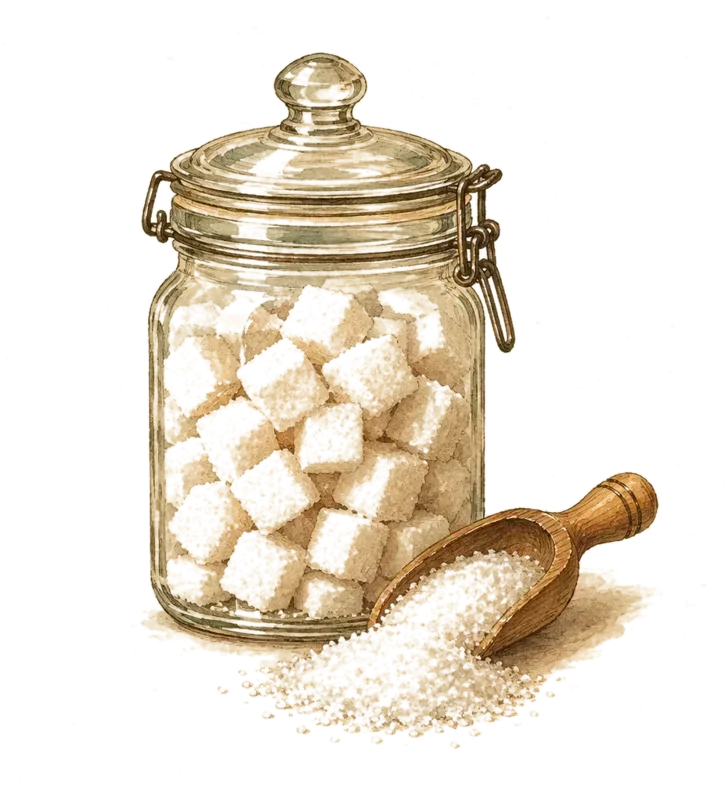
Unlike the , caramelisation needs no protein, only and high heat. Table sugar starts to caramelise at roughly 160 °C. The darker it gets, the less sweet and the more bitter.
Why it matters
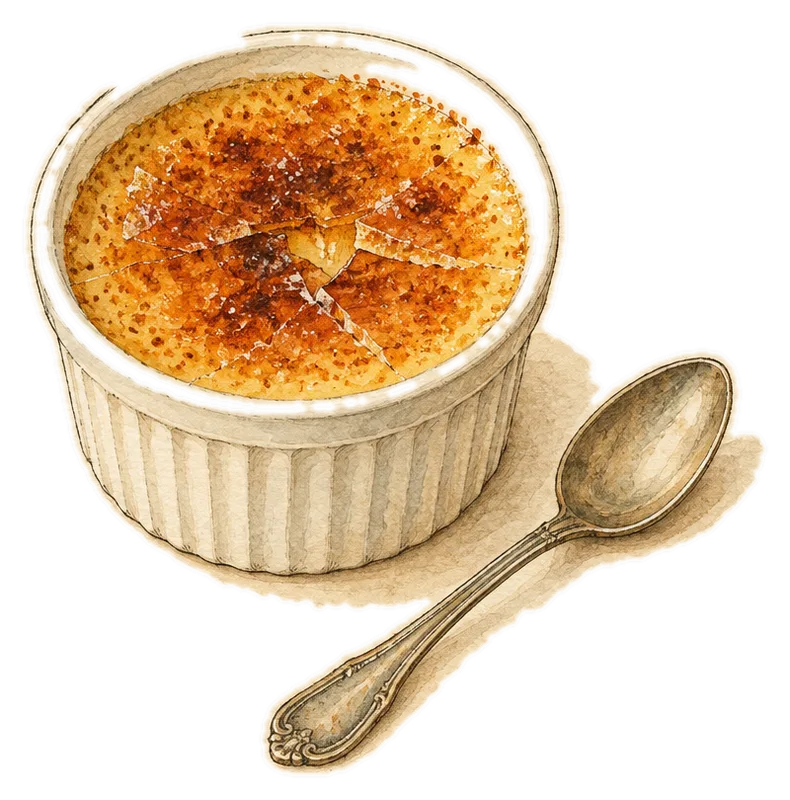
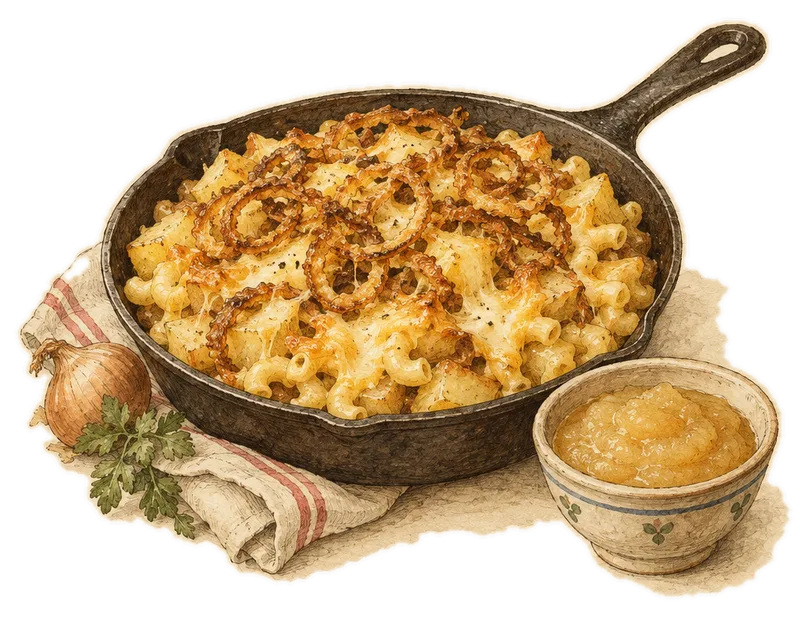
Gives , caramel sauce, candied almonds and roasted their depth. It almost always runs alongside the Maillard reaction.
Rules of thumb
- Use a pan with a light-coloured base so you can see the colour.
- Do not stir; swirl instead, otherwise the sugar crystallises.
- Amber is usually ideal. A splash of cold water or cream stops the browning.
Levers
2
In practice
2
Desserts and sweets
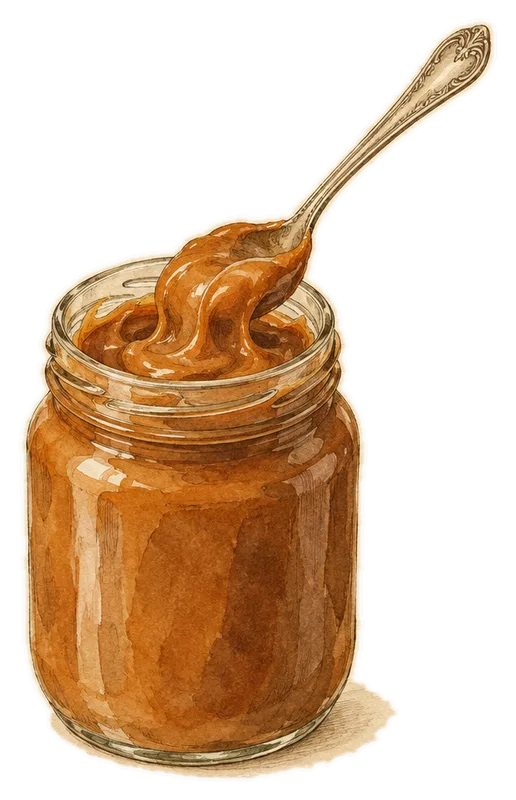
Caramel sauce: melt sugar to amber, then stir in warm cream and butter.
Vegetables
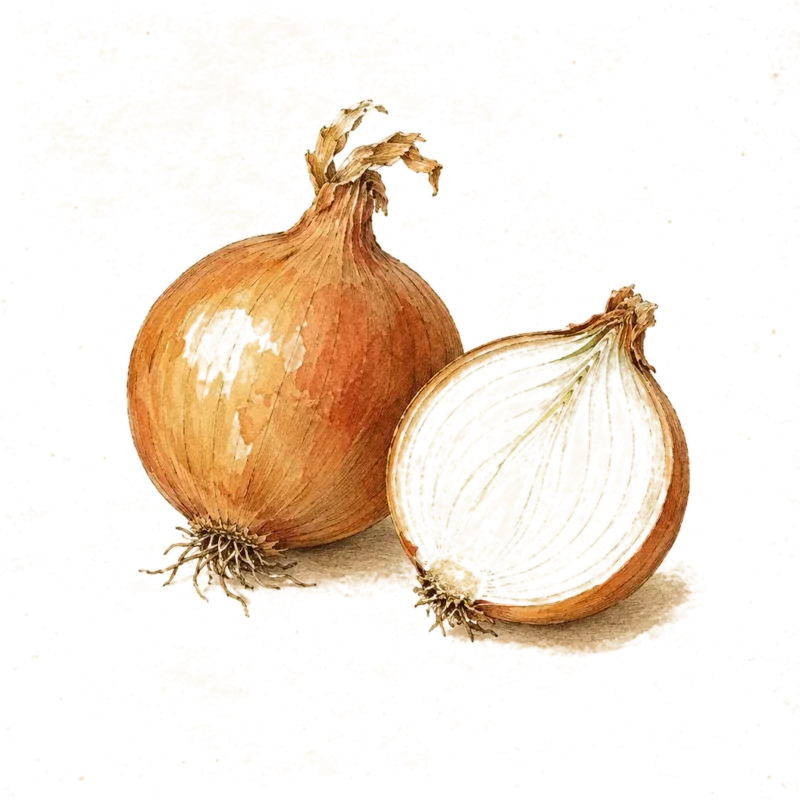
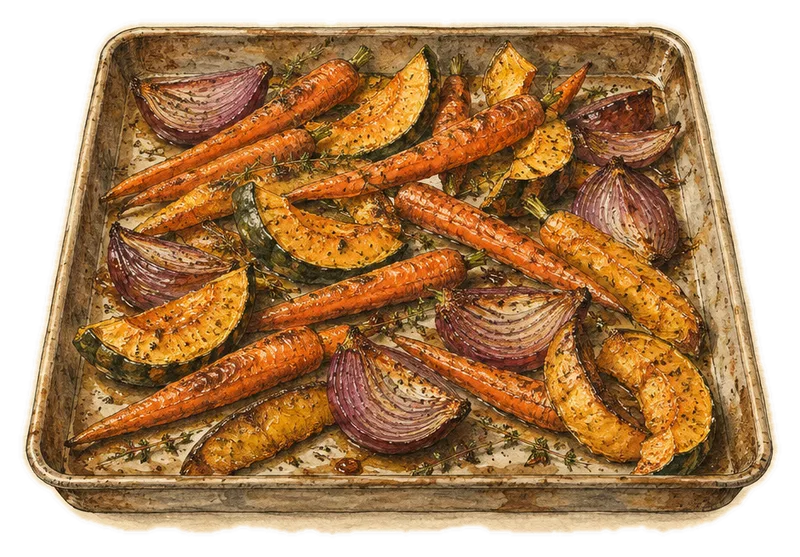
With onions and carrots, caramelisation and Maillard run together.
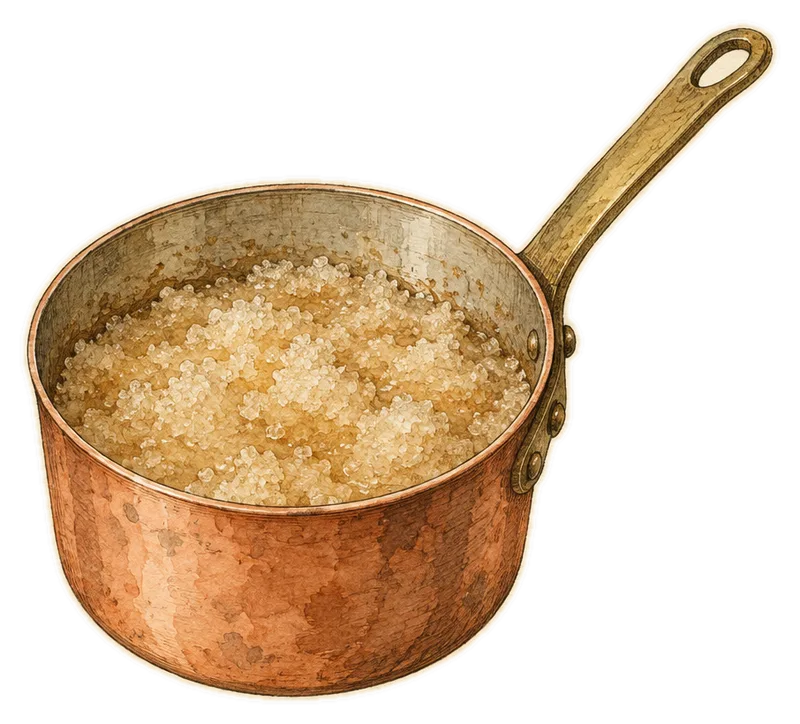 Caramel turns grainy
Sources · 1
- Harold McGee: On Food and Cooking (2004), Kapitel Kuchen, Gebäck, Zucker